IMF pushes reform agenda in Dhaka talks

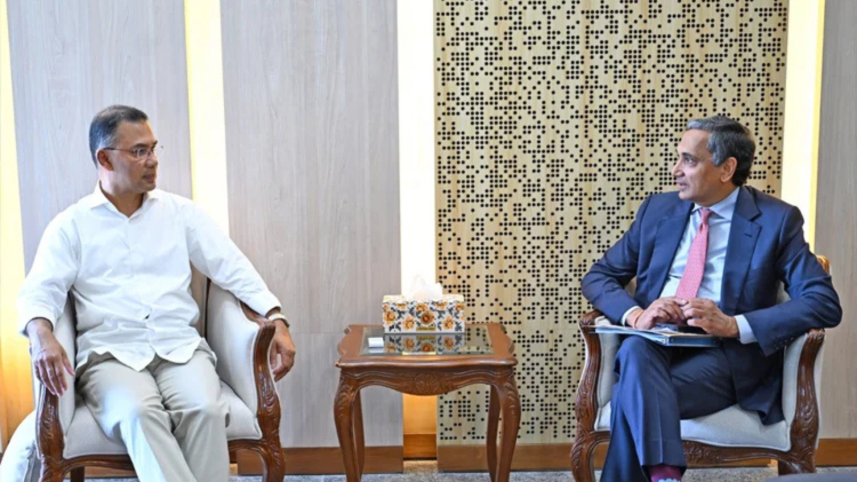
IMF Director for Asia and Pacific Department Krishna Srinivasan paid a courtesy call on Prime Minister Tarique Rahman at the Bangladesh Secretariat
in Dhaka on Tuesday. Photo: PMO
Originally posted in The Daily Star Sangstha on 24 February 2026


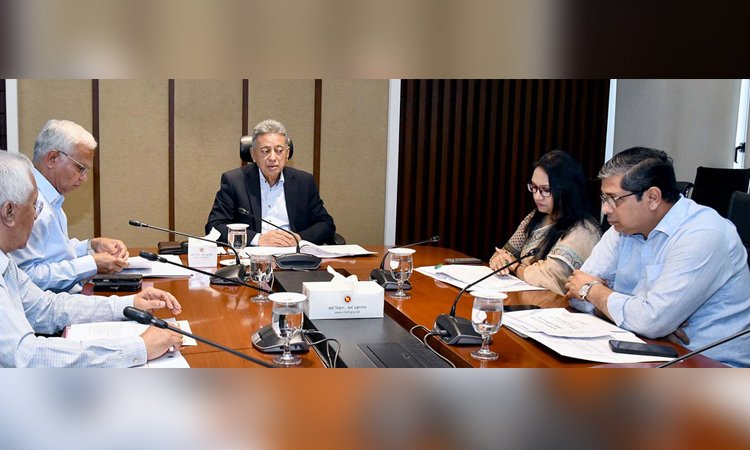
An International Monetary Fund (IMF) delegation, led by Krishna Srinivasan, met Prime Minister Tarique Rahman in Dhaka today as discussions resumed on the stalled $5.5 billion

loan programme.

Srinivasan, director of the IMF’s Asia and Pacific Department, is on a two-day visit to Bangladesh to revive negotiations that have remained on hold since November last year.

The courtesy call on the prime minister was held at the Secretariat. Finance Minister Amir Khosru Mahmud Chowdhury was also present.

The talks centred on Bangladesh’s reform agenda and the challenges facing the economy, particularly amid ongoing global uncertainty and geopolitical tensions.

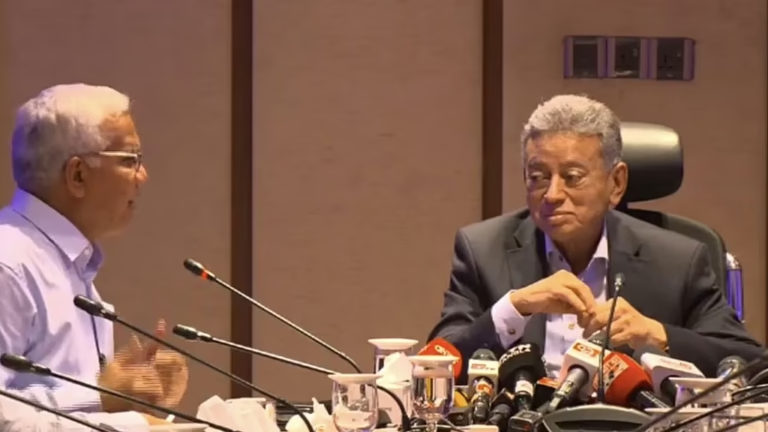
Speaking to reporters after a separate meeting with the finance minister, Srinivasan said discussions with Bangladesh are primarily focused on policy measures.

“Our engagement this morning with the minister was centred on policies,” he said, adding that IMF financing is fundamentally anchored in policy dialogue.

He noted that Bangladesh, like many other countries, is facing uncertainty due to global developments, but reaffirmed the IMF’s continued support in addressing economic

challenges. Key issues are being discussed with both the finance minister and the prime minister, with further engagements planned in the coming days.


The IMF delegation is also scheduled to meet the Bangladesh Bank governor later in the day.

Bangladesh may receive a $1.3 billion tranche from the IMF by June if the government advances key reforms, including moving towards a more market-based exchange rate,

strengthening revenue mobilisation, reducing subsidies, and addressing vulnerabilities in the banking sector.

Earlier, two instalments were released together in June last year, but no further disbursement followed the fifth review in November.

The finance minister said Bangladesh’s ongoing programme with the IMF remains active.  He added that discussions are progressing, particularly on reform requirements and

their feasibility in the current economic context.

The minister acknowledged that the government inherited a fragile economy, citing weaknesses in the banking sector, stock market, and tax-to-GDP ratio.

He said the government is prioritising structural reforms, deregulation, and measures to reduce the cost of doing business.

He also highlighted initiatives in the social sector, including family cards, farmer cards, and loan waivers, and said stalled development projects would be revived.

On IMF conditions, Chowdhury said some measures are being implemented immediately, while others will be phased in gradually. Further discussions are expected during the

IMF-World Bank Spring Meetings in Washington in April.

Regarding the expected IMF disbursement, he said the issue would be reviewed in July alongside budget preparations.

Addressing concerns over energy imports, the minister said financing strategies are under discussion and would be elaborated at upcoming international meetings.

Despite global headwinds, including disruptions linked to conflict, he said the government has managed the economy effectively in recent weeks, citing stable commodity prices

during Ramadan, no major transport disruptions, and timely wage payments in the garment sector.

He urged citizens to remain patient, noting that many global factors are beyond the government’s control.

“With collective effort and restraint, we can overcome the crisis and move the economy forward,” he said.

On fuel prices, the minister said the situation remains under review.

Stay Updated

Glossary

Last Updated: 14th December 2025

Loading glossary...